The Cycle of Flare-Ups and Remissions: What Biofilm Does
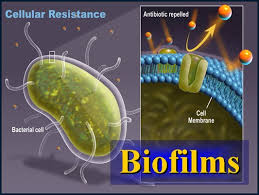
The ability to produce biofilm for protection is an amazing survival technique that bacteria have evolved over millions of years. It is a highly effective protective mechanism which allows bacteria to survive the harshest environments. Biofilm is a like a ball of slime that protects the parasitic bacterial infection at the core. Biofilm encases bacteria, and it can sometimes make them up to 10,000× more resistant to antibiotics.
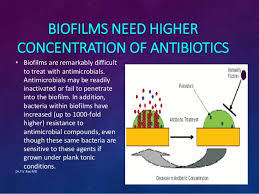
Read that again: up to 10,000× more resistant to antibiotics. When biofilm is present, the antibiotics don’t really work. Not for long.
How Biofilm Works
Bacteria have evolved so that they can secrete a layer of biofilm across themselves for protection. This amazing evolutionary feat shows that bacteria sure know what they’re doing! Bacteria have been doing this for 3.5 billion years. I bet they’ve perfected it by now.

Biofilm has a chemical layer that acts as a barrier which slows antibiotics down. In addition, the slimy surface is a physical barrier that must be penetrated to be beaten. This means that antibiotic treatment is usually not effective against bacteria protected by a biofilm. Long term antibiotic treatment can’t be the answer.
Antibiotics work best by attacking fast-growing infections. Biofilm production is a slowly reproducing creeper of a process. The biofilm protective layer reproduces so slowly that antibiotics can’t get through it. The biofilm “observes” the antibiotic but doesn’t really absorb it per se.
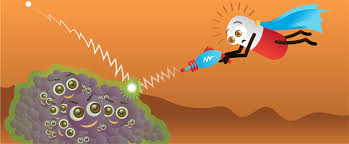
Antibiotics just go right past the biofilm and barely even react.
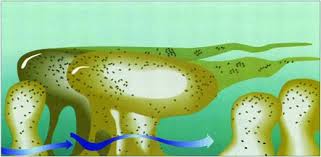 Biofilm protects systemic yeast overgrowth in the gut.
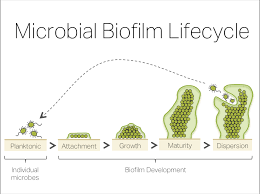
A Biofilm layer sits on top of bacteria, mold, yeast or fungus. It protects the whole community underneath it.
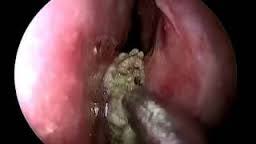 This Aspergillus fungal lung infection is covered in biofilm.
Lyme bacteria and other co-infections can “hang out” with underlying mold beneath the protective biofilm layer, oblivious to what’s going on outside. This protection ensures that Borrelia bacteria and co-infections can survive until after the antibiotic (frequently doxycycline) has dissipated.
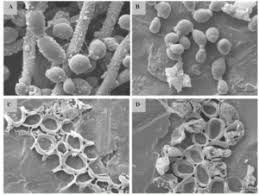 Human fungal infections
The picture above is of a fungus that lives within humans. It has the ability to make energy with or without oxygen, switching back and forth between breathing and anaerobic energy production. It functions kind of like a plant … and kind of like an animal. You can see its associated biofilm support structure. This fungus feeds on carbohydrates and sugar, which people have too much of in their diets. This may cause so much belly bloat that the skin over the abdomen can appear shiny. This is the effect of yeast, which feeds on two staples of the American diet: bread and beer. And Big Gulps.


This 7-Eleven Team Gulp on the right — available at most gas stations — is the equivalent of one gallon of soda. That’s 128 oz. of soda. Yeast feeds on sugar. At 39 grams per 12 oz. of Coca-Cola, that’s 416 grams of sugar — or almost 15 ounces of sugar. That’s a pound of sugar! This is ridiculous.
 Imagine what this would do to your health!
Bacterias’ ability to use biofilm production as a defense is a very similar concept to a bear going into hibernation to wait out the harsh winter days However, the Borrellia bacterium and its co-infections will produce the biofilm when times get tough. They will then reemerge when the danger has passed.

The Nature of Relapsing Diseases
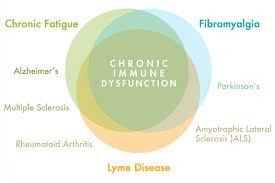
Look for the patterns of symptoms
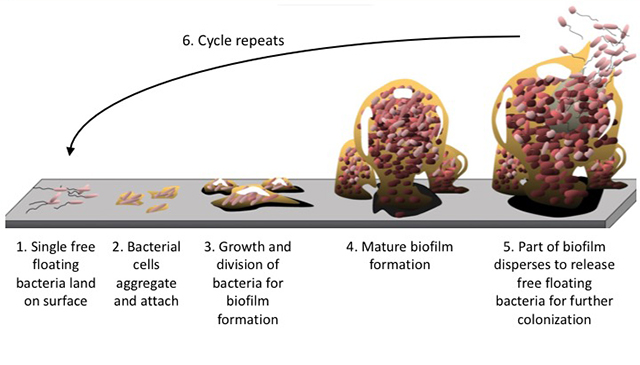
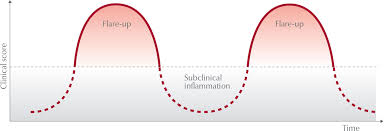
This is important, because relapsing conditions like Lyme disease have a pattern of coming and going. The disease has cycles, becoming active and then going into remission. This cycle or pattern can be explained by the presence of bacteria which hide out and survive under their biofilms. At some point, it becomes necessary for the bacterium to emerge from under it, multiply and spread to another area, causing an active infection along with its associated symptoms. Bacteria have to multiply or die. They will eventually produce another biofilm under which to hide, go into remission, and symptoms will thus ease for a while. This is an oversimplified version of the cycle, but accurate enough to illustrate the importance of addressing biofilm.
Look for the pattern of flare-ups and remission with your symptoms. Do you think the presence of biofilm may explain part of this pattern?
 The flare-up and remission cycle. See how it works?
Here’s how ongoing bacterial infections cause relapsing diseases: the Borrellia spirochete likes to attack the cartilage in large joints. Here is how you can spot some of the symptoms of its effects. You may or may not have had the telltale sign of a bull’s-eye rash, or EM (erythema migrans). This is a spreading ring, like the rashes associated with spirochete bacterial infections such Lyme, Syphilis, Yaws, or Relapsing Fever.
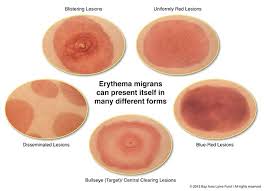 Examples of bull’s-eye rashes Rashes
Here is one possible scenario: I want you to picture this, or see if you can relate to it…. Let’s say you have pain in one of your joints, like your knee, and it just flared up for no apparent reason. You didn’t really do anything, but it sure hurts. In some diseases, infectious bacteria, living within our bodies, can repeatedly attack our joints. When it keeps doing this, it causes cycles of destruction — just a little bit at a time, but cumulatively, it causes destruction. All you know is that your knee or shoulder hurts for no apparent reason. The knee might even give you telltale signs of being red, swollen, shiny and warm. Do you see the pattern — and can you relate to it. This is a sign of infection, and so you go to a doctor. The doctor sees that the joint is red and swollen, and prescribes antibiotics for the flare-up.
 Look for patterns and try to figure out the cause.
What is really happening is you’re having a Lyme disease flare-up, and the spirochetes are actively causing destruction to a joint. There is a cycle to the action of these bacteria. They need to feed, breed, and go back into hibernation. It makes sense when you think of it like this:
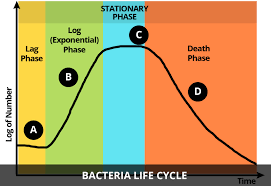
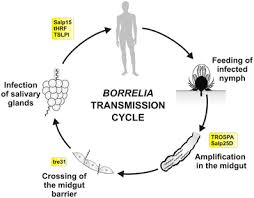
These antibiotics would normally be enough to kill the Borrellia bacterium off. However, the disease has advanced, and it can now can secrete a new biofilm blanket for defense. Borrellia begins producing a biofilm layer, covering itself to protect itself from danger. Some of the infection will actually be killed off, but not all of it. Antibiotics work by keeping bacteria from building their cell walls when they reproduce. If the bacteria can’t make their outer shell, then they can’t reproduce and they die. This is how antibiotics are supposed to win.
None of this matters to Borrellia, however, because its bacteria are covered under the slowly reproducing biofilm and they’re protected. I’m sure the bacteria know that the antibiotics are being used to kill them. I bet they’re glad for the protection offered by the biofilm. That’s why they secreted it. But remember: antibiotics need to be about 10,000× stronger to get through the biofilm. So, Borrellia‘s bacteria are protected enough to survive. They win.
Bacteria can reemerge from under the biofilm, branch off to travel to other places in the body, become an active Lyme flare-up again (and cause destruction), go back into hiding, secrete new biofilms, and colonize new tissues throughout the body. This is their life cycle.
So, can antibiotics actually trigger the biofilms to create a stronger barrier?
The answer is: yes! Biofilms are designed to protect bacteria and they help them go into hiding. Biofilm is a protective mechanism that forms when bacteria are under stress. During the time that antibiotics are being used, there’s a lot more biofilm being manufactured. Bacteria will always go into defensive mode whenever almost any antibiotic is used. Antibiotics will cause an increase in biofilm. See how they work?
Back to the Lyme knee: what happens when you take the antibiotic is that it kills some infection, the inflammatory cycle reduces, and the knee pain subsides. That’s what you wanted: you wanted the painful Lyme knee pain to go away. Next, you’re feeling better — and you think you’re good to go. Some people just love being on antibiotics because it makes them feel better. Do you consistently feel better while on antibiotics? The moment has passed, the cycle of antibiotics is over. The pain and swelling are gone.
In reality, enough of the bacteria were killed to make the symptoms go away. Some, but not all. The remaining bacteria were protected; biofilm provided the protection. They will be back to attack. The pain will return, because it always has. It’s truly a vicious cycle of flare-ups and remissions.
 Look for the vicious cycle and design a plan to combat it.
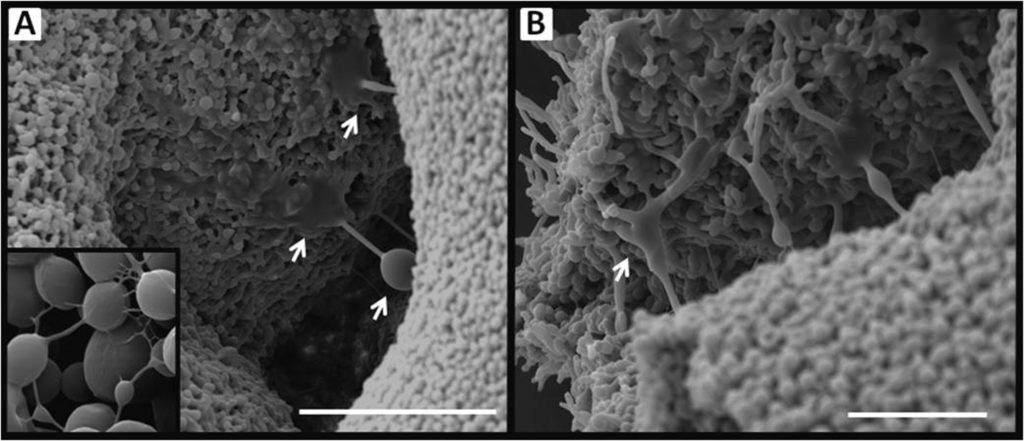
Close-Up Images of Biofilm
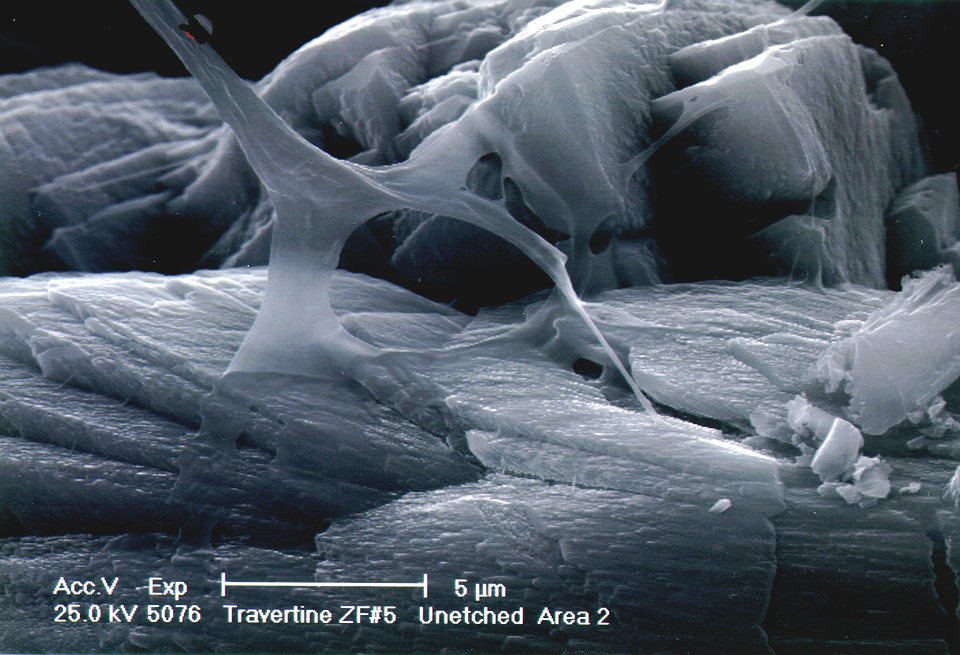
Biofilm city
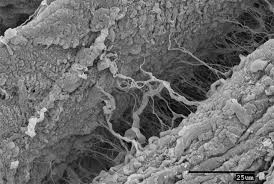
Notice how the biofilm gives a protective layer to the bacteria underneath.
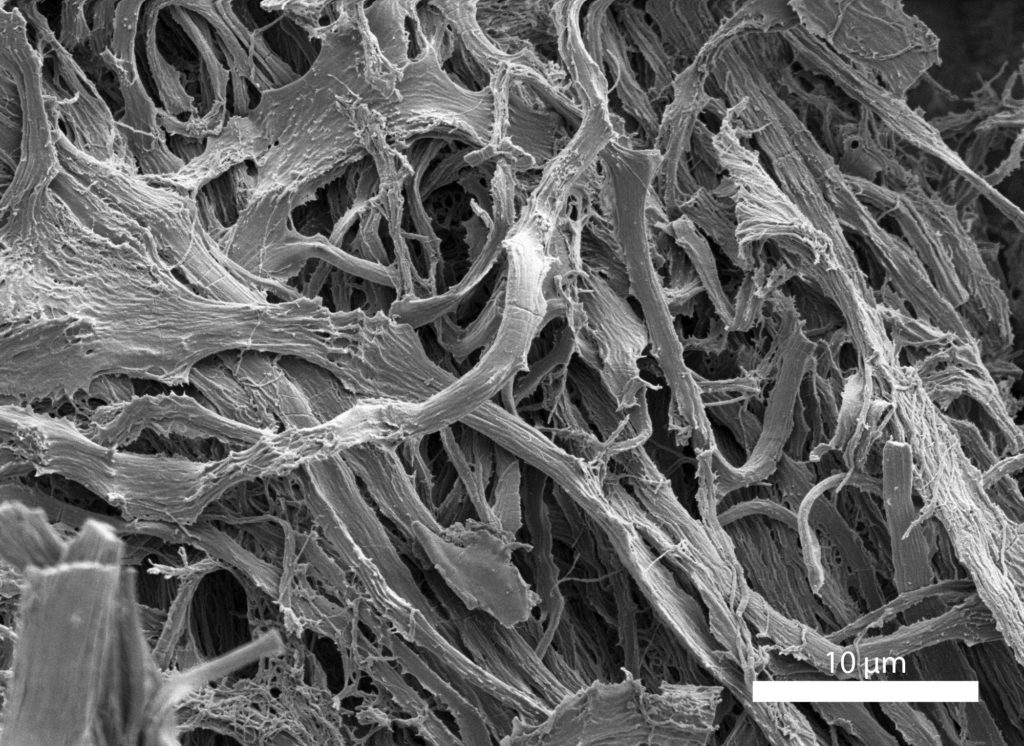
Borrellia bacteria can send nutrients and toxins through these channels
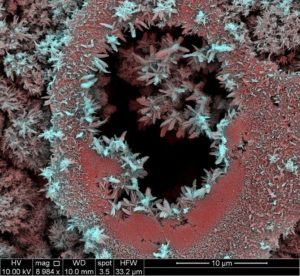 Biofilm can look like something out of this world!
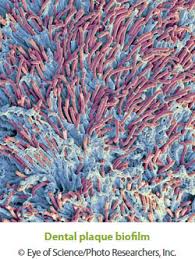 Biofilm on teeth
What Can Be Done About Biofilm?
Bacteria that are encased in biofilm are hard to detect. They are in full evasion mode, and they’re trying to hide. They’re not moving around. They feel threatened, and are in lockdown mode. They’re trying to survive, and they’re staying put. This is especially true when we look for bacteria in blood. When bacteria are in the bloodstream, they have to be in full-on biofilm mode. Bacterial infections in the human bloodstream are in constant contact with the immune system. They’re trying to evade detection. Consequently, it’s difficult sometimes to find these bacteria because of their biofilm protection.
How can you defeat biofilm?
The only way to combat bacterial infections that are protected by a biofilm is to essentially pop a hole in it, and kill everything beneath it. This is similar to tenderizing meat by poking holes in it. If you don’t poke holes in the meat, then the marinade won’t get down into the deepest parts of it.
Well, you have to poke a hole in the biofilm in order to get the medicine get down down underneath it.


Oxygen therapies can sometimes burn a hole through biofilm. The process is based on oxygen, and the infection can be killed. This technique is similar to using oxygen to burn something in a fire. The bacteria just can’t take that oxygen. Oxygen kills the bacteria. This is a bacterium’s biggest weakness: it doesn’t have antioxidants, as humans do.
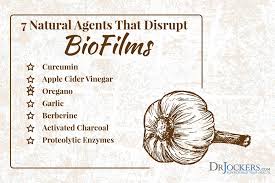
One possibility of treating biofilms is to continually take certain enzymes like lumbrokinase, serrapeptase (serratiopeptidase), Monolaurin, or Cat’s Claw (Uncaria tomentosa) to bust through biofilms so the underlying infections can be treated.
 These are enzymes which are Biofilm Busters
Biofilms are increasingly prevalent and implicated in more and more diseases. While much remains to be learned about them, a more relevant question for patients might be: What can we do about them?

3 comments
Perfect just what I was searching for! .
Hello my friend! I wish to say that this post is amazing, nice written and include almost all vital infos. I would like to see more posts like this.
Sweet internet site, super design, real clean and utilise friendly.