Erlichiosis / Anaplasmosis
Ehrlichiosis and Anaplasmosisare are two co-infections of Lyme disease that are unique. Both of these infections behave like bacteria (which are living) and viruses (which are not alive). They are actually smaller than bacteria but larger than viruses. Both are transmitted to humans by ticks. Symptoms resemble those of Rocky Mountain spotted fever except that a rash is much less common. The illness happens quickly with fever, chills, headache, and lethargy. You don’t have any energy and you just don’t feel well at all. It can turn serious and should not be taken lightly.

Anaplasmosis virus
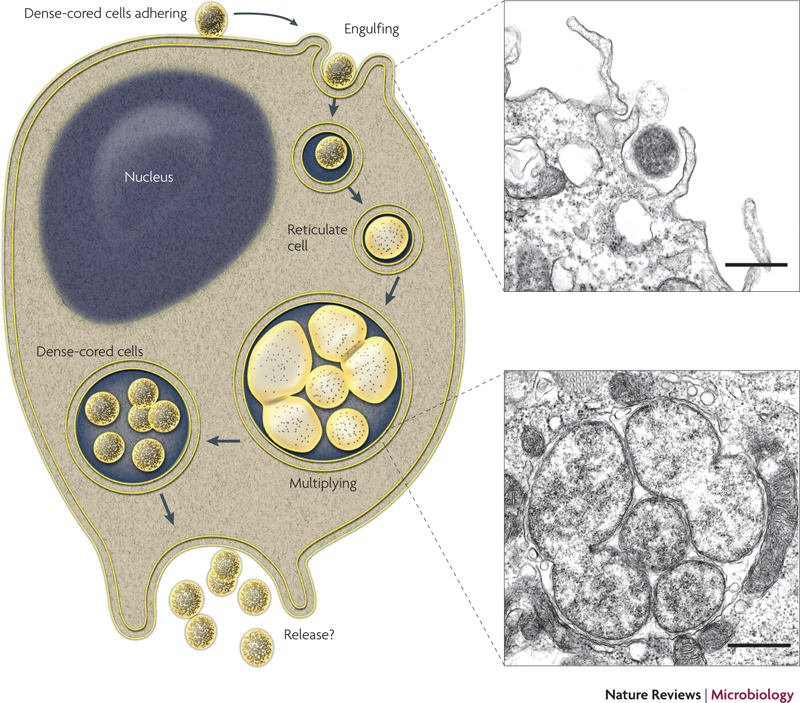
This diagram shows how Erlichia gets into a cell and begins releasing toxins.
Ehrlichiosis is caused mainly by Ehrlichia chaffeensis; anaplasmosis is caused by Anaplasma phagocytophilum. Both are transmitted to humans by ticks. Symptoms of both diseases are the same and it is hard to tell them apart. The disease can be mild or it can be life threatening. Many infections can be asymptomatic. It generally starts suddenly with flu like symptoms of high fever, fatigue, muscle aches, and headache. Severely ill people can have low white blood cell count, low platlets, anemia, elevated liver enzymes, kidney failure, and respiratory distress (possibly air hunger). Older people and people with weak immune systems may require hospitalization. It can cause seizures, multi-organ failure, and coma. Deaths have occurred.
We are limited in diagnosing this because we can only test for two single species. Once inside the cells they form mulberry shaped clusters that can sometimes be seen. Seeing these clusters can help to identify it. The infection can still be easily missed and there are many false negatives on testing. It should be suspected if someone doesn’t respond well to treatment for Lyme disease.
These bacteria, along with Babeosis, are the most common tick-bourne co-infections according to Dr. Richard Horowitz. The Ioxides ticks and the Lone Star ticks carry these infections. These two ticks also carry the Heartland virus. The 2012 New England Journal of Medicine said the Heartland virus causes an illness nearly identical to Erlichiosis but it is now unresponsive to anti-biotics. Lyme disease and babesiosis are spread by the same ticks. It is easy to see how viruses such as these are evolving and developing a tolerance to our treatment methods. Many patients who test positive for Erlichia or Anaplasmosis never remember getting a tick bite. Several cases of Anaplasmosis have been reported after blood transfusions from asymptomatic or acutely infected donors. New and innovative treatment approaches need to be explored.
Some people have indicated that these bacteria are a likely explanation for the summertime flu.

Ixodes scapulari
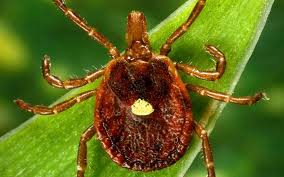
Note the white spot on the Female Lone Star ticks.
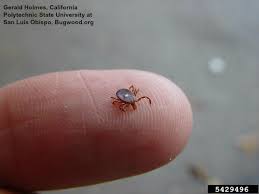
Note the size of the tick.