


The Overview on Infectious Diseases… as it pertains to those with Lyme Disease

Borrellia Burgdorferi is a name synonymous with Lyme disease. This bacteria is one of many infections we can get from tick bites.
We are going to to talk about ticks and infections. Humans are animals. Animals get bacterial and viral infections all the time. Mammals also get worms, and parasites, and other little infections. Dogs and cats get dewormed as soon as they are sick. Humans get all of the same stuff. Humans are not as clean as you think.
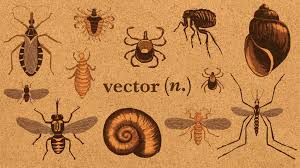
We are talking about infections diseases here. We can get infections from ticks, mosquitoes, lice, mites, and other things. Fleas can harbor infection and transmit infections too. All of these animals can all transmit infections diseases to us.
Lyme Disease is one of these infectious diseases.
How do we get these infections?
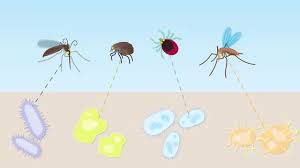
When animals carry a disease they are called disease vectors. This means they carry the disease within them. They take it with them from place to place because they are infected with it. Humans can also be a disease vector. We carry all kinds of infections diseases. In the case of Lyme it is an insect that carries and transmits an infectious bacteria right into a warm blooded mammal. This is just how it spreads. It is a natural phenomenon.
Infectious diseases are just a natural part of life. One thing is for sure, there are a lot of sick people out there suffering from them. Lyme disease is one of the infectious diseases. There are others. Lyme disease is caused by infection from a bacteria called Borrellia. There are different types of Borrellia than can cause Lyme Disease. Borrellia Burgdorferi is the one you hear about most often.
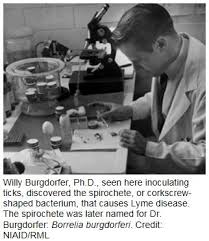
Lyme Disease was named after Lyme, CT where it was first diagnosed in 1975. The Borrelia burgdorferi bacteria are named after scientist Willy Burgdorfer, who first identified the bacterial strain in 1982. This is the strain that was causing Lyme Disease.
Borrellia Burgdorferi is not the only one.
There are over 100 different strains of Borrellia bacteria in the United States. In the USA, Lyme Disease is twice as common as breast cancer and six times as common as AIDS.
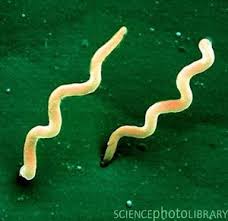
This is the corkscrew shaped spirochete called Borrellia. You can see it digging its way into the cell. As it spins it creates a hole that it can go through. This bacteria is also a shape shifter. Borrellia can change into multiple different shapes depending on how much danger it is in. Borrellia does this to evade being killed by the immune system.
We have found Borrellia in ticks that are 20 Million years old. Borrellia can survive so long because it is a master at avoiding being killed by the immune system. Needless to say we are stuck with it. It’s like a bad habit. Once you have it then It’s not going anywhere.
Most people with Lyme Disease have multiple infections. These are called Coinfections.
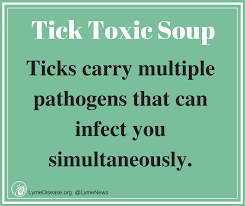
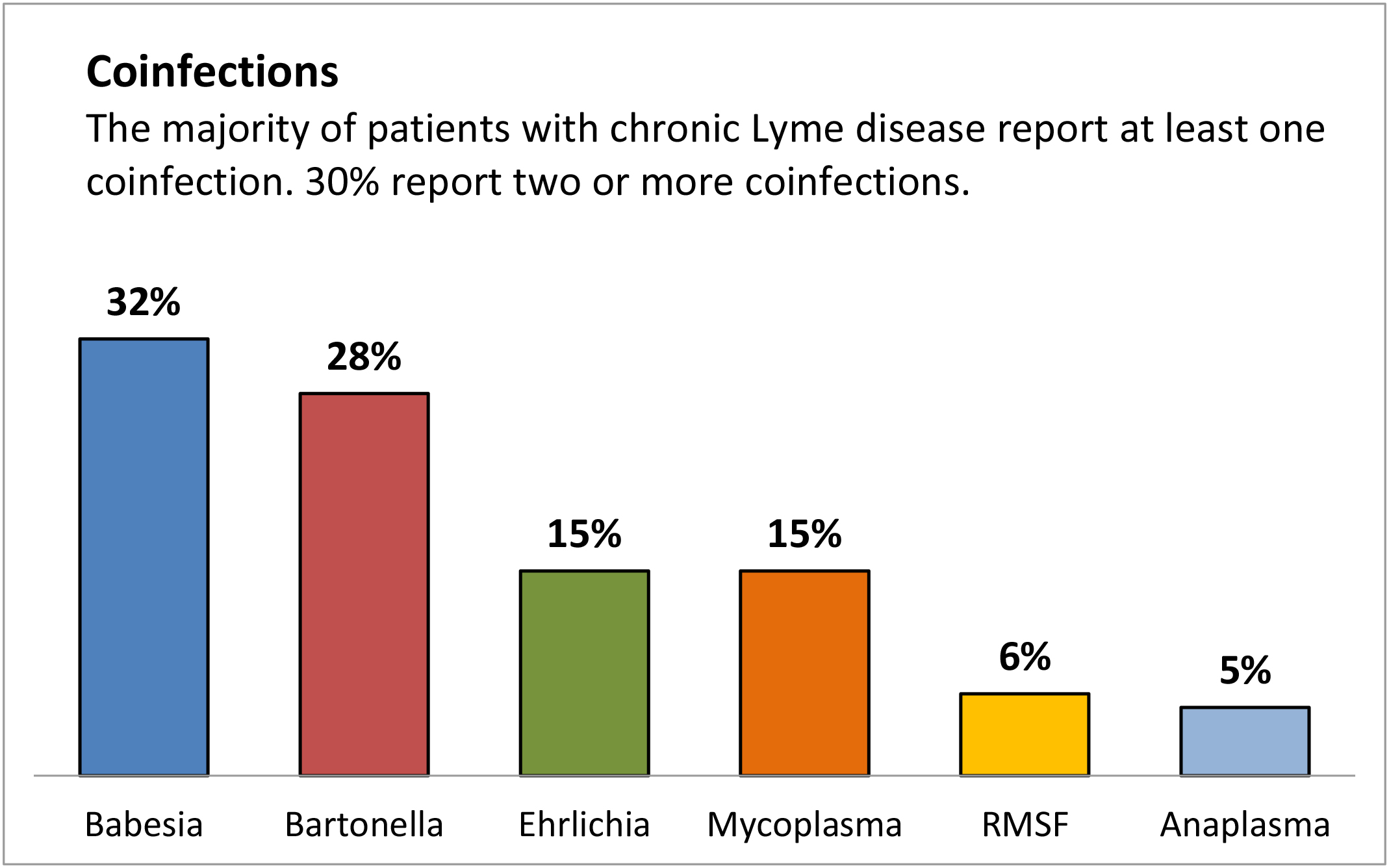
Lyme Disease is actually made up of a whole lot of bacterial infections. The tick bite injects a big toxic mess of bacterial and viral infections and co-infections. It’s never just one. There might just be a couple or there might be a whole bunch of them.
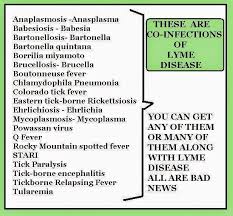 Borrellia is the main infection in Lyme Disease.
Borrellia is the the main infection. It’s the one doctors try to test for. To make matters worse the infected person always has other ongoing viral infections in the body. What happens is these bacterial and viral infections get together. Over time the infections will wear the immune system out. The immune system eventually gets to the point where it can’t heal. It gets stuck in the healing process It gets stuck because it just doesn’t have enough power to continue.
When there is Borrellia present and the immune system cannot kill it they call it Lyme Disease.
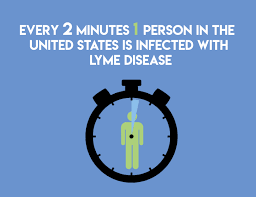
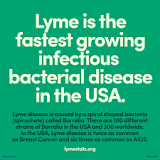
The problem is with the current healthcare system and the tools we have it is hard to come up with an accurate diagnosis of Lyme Disease. Many people suffer and just don’t know why. They just know they’re stuck in the healing process.
The Player
This is where it gets real interesting.
Borrellia Burgdorferi is a bacterial infection that is transmitted by a tick bite. Bacteria are very small cells but they do not have a center called a nucleus. This is common in very old organisms. Borrellia bacteria can be found in the bulls eye rash that occurs with some infected people so we know that they are associated with it. Borrellia are very complex bacteria. They can manipulate their shape to constantly evade detection. This bacteria can outsmart our immune system. I am going to try to explain how this organism works so you better understand why Lyme disease can be so hard to treat.
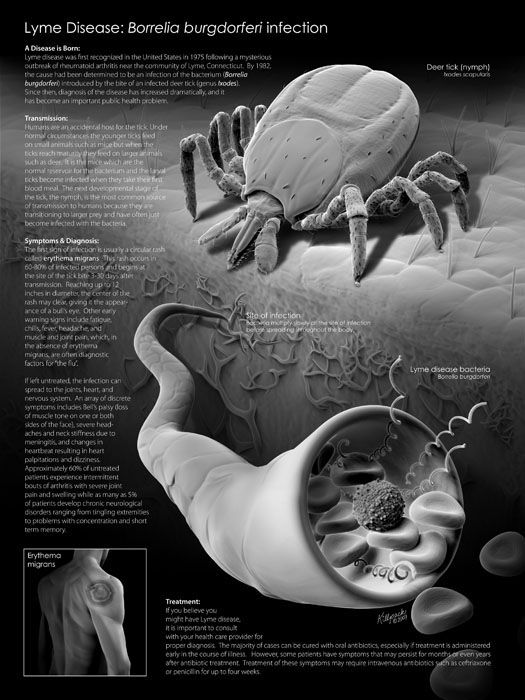
The Borrellia bacteria is transmitted by the bite of an infected tick. Ticks bite the most when they are in their “teenage years”. During this stage it is called a “nymph”. It is usually less than 2mm and often overlooked. If you sprinkled black pepper on your leg that is what the size of the tick would be. It’s very small and hard to spot. Everything associated with this bacteria is hard to spot. The ticks are most active in summer and early fall. There are certain hot spots of tick infestation in the nation. However, unless proven otherwise, consider this a nationwide epidemic that is getting worse.
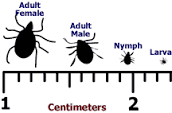
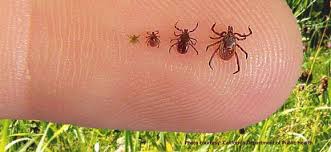
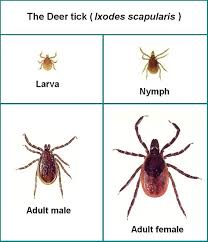
Once the tick bites it borrows its head into the skin. It numbs our skin so we can’t feel it and starts to feast on our blood. This is what ticks do – they like to suck the blood of warm blooded mammals. That is what they like to eat.
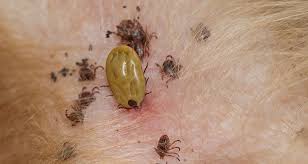
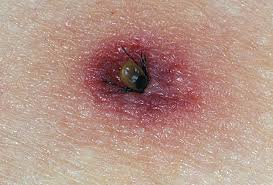
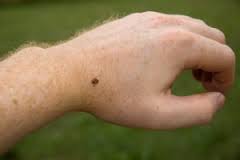
Sometimes these ticks can be stuck drawing blood for 2 or 3 days before we notice them. They can be engorged with blood.
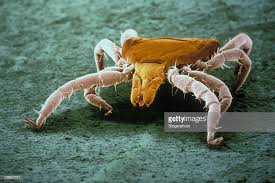 Hello. I want to bite you.
The longer the tick remains attached and feasting the more likely it can infect you with the Borrellia bacteria. It just simply has more time if it stays on there longer. Some people think it needs to stay attached for about 1-2 days before it infects us with the Borrellia bacteria. This is nonsense. When the ticks bite they can transmit the bacterial infection immediately. I don’t think that makes sense that it has to wait any time at all. If the tick has the Borrellia bacteria you can get infected anytime you get bitten. Now, if it is feeding for a longer time there is more time for you to get infected. That makes sense to me.
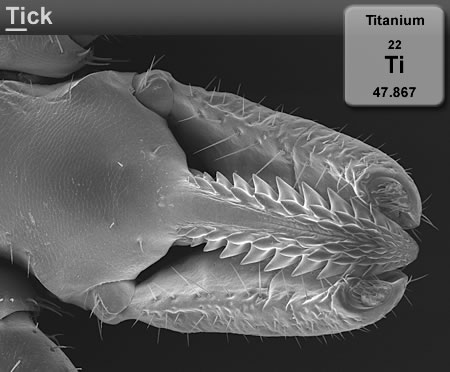
Here are pictures of the tick parts.
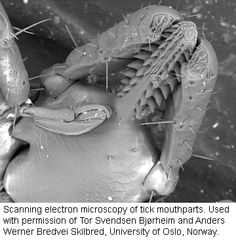
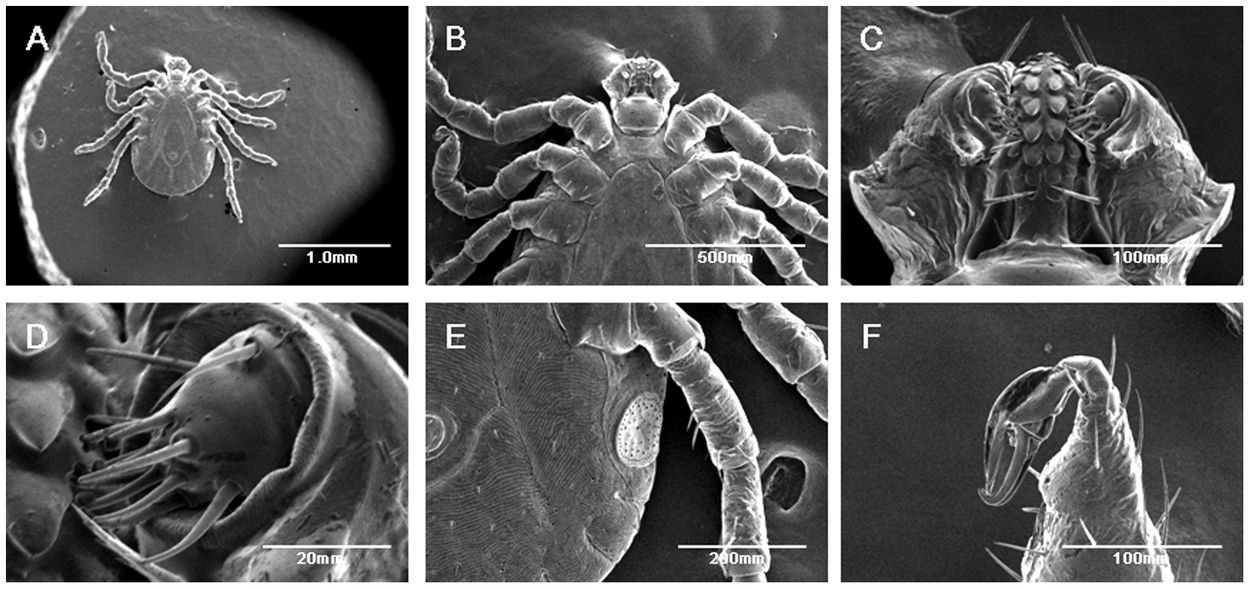
What happens is that ticks bite mammals. The ticks themselves have been infected. The Borrellia bacteria live part of their life inside the gut of the tick. When the tick starts feeding it signals the bacteria to move from the gut to the salivary glands of the tick. The spirochetes then get injected from these glands in the tick’s mouth into us.
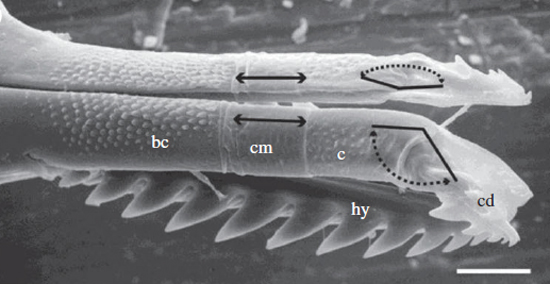
This is what the ticks hook onto us with. This is it sucks blood with and this is what the bacteria will be injected with.
Microscopic view of Borrellia
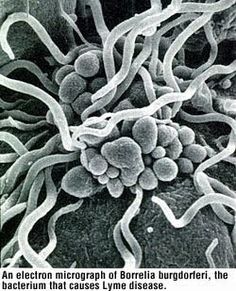
This is what the bacteria look like inside the tick. They are a spiral shaped corkscrew. When it is in this form it is called a Spirochete. The spiral shape drives them around through internal propulsion.
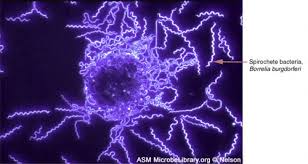 This is a mess.
Watch the Borrellia spirochetes below moving about. They are very quick and can go anywhere in the body. Once infected is is very hard to find the bacteria in the blood. It prefers to live within the organs, the muscles, and the brain!
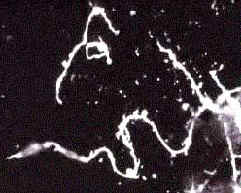 Granular Shedding. This shows the spirochete slinging DNA everywhere.
This is a picture of Borrellia undergoing a process called granular shedding – spreading pieces of itself everywhere! This is what it does when it needs to evade the immune system! Granular Shedding is a wonderful evolutionary survival tactic. The bacteria senses that it has been caught. When it undergoes granular shedding this it actually loses unnecessary DNA. It loses the DNA necessary to maintain the corkscrew shape and other things. Without the necessary DNA information it cannot maintain the corkscrew shape. It changes into a cyst and just hides for awhile.
You can see the spirochete and cystic shapes here under the microscope.
The big circles are blood cells. This video clearly shows spirochete shaped bacteria.
It all starts with a tick bite from an infected tick.


Most people don’t remember being bitten. Very few actually know when they contracted the disease.
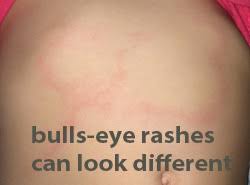
A 2010 study showed that in the state of Maine only 43% of Lyme patients exhibited this particular type of rash.
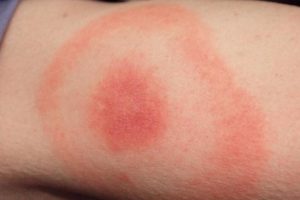
A couple of days after the tick bite infection some victims will develop a rash. The rash will be small at first – maybe only an inch across. The rash will start at the site of the tick bite. Sometimes, but not always, it will grow into a larger bullseye shaped rash. This rash is called Erythema Migrans.
Feeling Rashy?
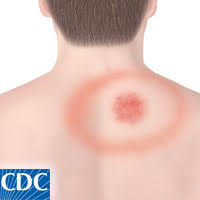
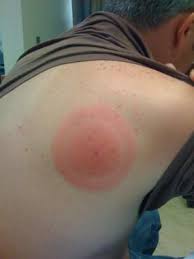
A rash always means infection. Seek medical help. Treat the infections immediately.

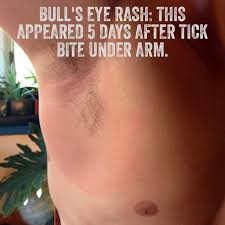
One thing is certain… If you get bit… and then you get a rash – then know that you have been infected with something.
If you get this bullseye then seek medical treatment of some sort. Immediately – get it immediately. Many people get prescribed antibiotics. Not everyone gets a rash after being bitten.
http://dx.doi.org/10.1098/rspb.2013.1758
The link above gives detailed information on exactly how ticks feed.
After the tick bite we are infected.
Once the bacteria have infected our body the immune system must now detect it and fight. The immune system will fight the infection by making these things called anti-bodies to Borrellia. Antibodies give our body the information it needs to recognize and fight Borrelllia. Making antibodies is like figuring out the bacteria’s weakness and then making a note of it. That way the next time the bacteria comes around you already have his weak spot figured out (so you think). If a blood test detects Borrellia antibodies then you have been infected at some time. (Important)

After infection our immune system begins to fight and we get a bunch of predictable symptoms. The Borrellia bacteria is the cause and these are the effects.
These are called the symptoms of a disease.
Symptoms of Lyme Disease
You might not have all of these symptoms listed but if you do have Lyme Disease you will have many of them.
Different people have different symptoms because different immune systems respond to different challenges differently at different moments. Did that make sense? These are the most common symptoms of Lyme disease which are caused by the Borrellia bacterial infection within our bodies.
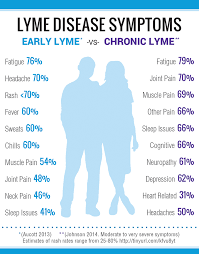
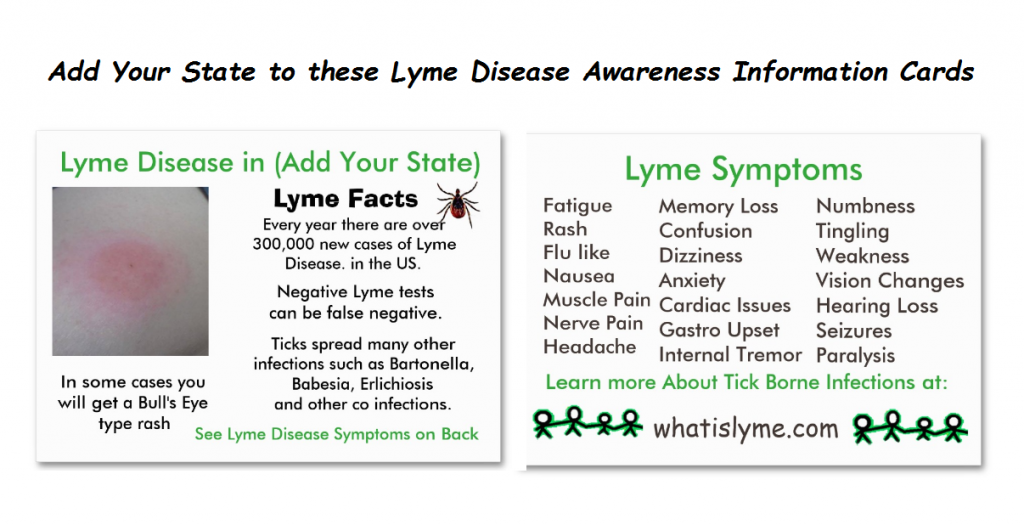
At this point the infection is real.
Once a person is permanently infected with Borrellia the condition is termed Chronic Lyme Disease.
Certain changes will need to be made to successfully treat this chronic infection.
These are suggestions only.

Pay Attention
We need to pay attention to what we eat and drink. Our can only run on what we feed it. Anything that we put in our mouth will either help heal the body or feed the infections. Our food is either going to help us or hurt us. Make sense? It has always been this way. We need to only consume things that heal the body.
 We must address our diet to begin healing our insides.
A diet that feeds the immune system and not the disease is crucial in healing. We need to eat to support the immune system. If you are not feeding the body then you are feeding the disease. You need to eat to become healthy again.
Addressing first things first
 Over consumption of sugar keeps us sick.
Sugar is inflammatory. We eat too much of it. The average person eats a half a pound of added sugar every day. This needs to be removed from the diet. That is 150 lbs. of added sugar a year with no nutritional value. Simple changes like this will lower inflammation in the body. This has to be addressed.

Food now becomes your medicine!
From now on your food becomes medicine. This is how it is done. Good old fashioned grunt work. You are treating your condition every time you put something into your mouth. Your goal is to consume healthy foods to build an environment that Lyme Disease can’t thrive in! You must stop consuming inflammatory foods that keep you sick. It’s as simple as that!
Diet needs to be addressed as soon as you begin treatment. If you think you’re going to slide by without really addressing this fundamental point then your results will be limited. You are so unfortunate. This is the root of the problem.
Skin conditions – Bullseye Rash
Borrellia infection only causes rashes about 1/3 of the time. It is estimated that in the Northeast about 1/3 of the ticks are infected. This is a rough estimate. The rash can expand out from the tick bite and SOMETIMES becomes a bull’s eye shaped rash called Erythema Migrans, If you get this rash consider yourself infected until proven otherwise. When researchers test this rash they find the Borrellia bacteria embedded within the rash. Sometimes these infection rashes can get really big – a foot across! After infection people can also get joint pain, low grade fever that comes and goes, fatigue, tendonitis, and neck, back, and muscle pain. The rash usually goes away on it’s own within a month. The symptoms often persist.
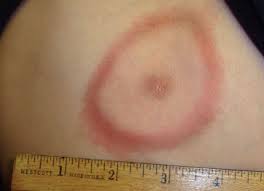
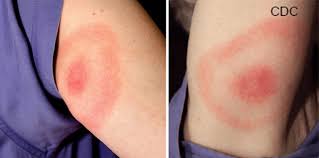
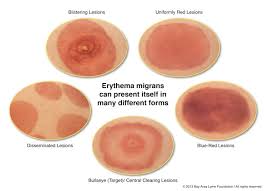
Sometimes these rashes can reoccur over the years even though you never got bit again. If the rashes do come back they’re usually smaller and they can multiply. These are proof that the infection is spreading throughout the body. That’s unfortunate. When rashes come back the infection is setting in and will be harder to fight. This is a sign that we sure have our work cut out for us now.
Neurological Conditions and Joint Pains
This bacteria really likes to infect our nervous system and joints. Neurological damage can cause headaches, brain fog, depression, numbness in the face, nerve pains or weakness in our arms and legs. Lyme arthritis of the joints (it likes to make the knees hurt) usually happens when the infection becomes chronic. Research says that the bacteria can cause ongoing reoccurring flare ups in the joints and and over time that will degenerate them and destroy them. These flare ups come out of nowhere.
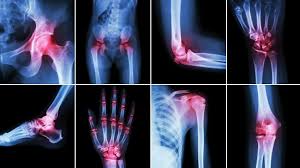

Do you know anyone whose back “goes out” on them for no reason? Do you have joint pain that comes and goes for no apparent reason? Some people call this the Wandering Arthritis. Have you ever said to yourself – “Oh well, I guess I’m just getting old?”


Back and joint pains that move around and happen for no apparent reason are classical symptoms of Lyme disease.
It must be my old Wandering arthritis…
Once the infection reaches this stage some people call it Late/Chronic Lyme Syndrome. This diagnosis has plenty of controversy. Some people don’t believe chronic Lyme disease exists. The people who do not believe it exists obviously haven’t been affected by it.

During the flare ups medical doctors usually prescribe targeted antibiotic therapies. Some patients have responded well to doxycycline and are often prescribed two antibiotics at the same time. It is helpful for those with Lyme Disease to find a LLMD – Lyme Literate Medical Doctor. Other people are perfectly fine treating themselves with natural therapies designed to strengthen the immune system.

 Lyme Disease
We think Phil Mickelson has undiagnosed Lyme Disease. Call it what you want…
There most effective ways to treat this condition are natural ways. Begin programs to detoxify the body. Address the Gut problems – it is always compromised to some extent. Supplements need to be individualized for each person. There is no “one size fits all” because there are varying states of disease.
Once you do this get out of the way and let the body heal.
The Details
This bacteria, Borrellia Burgdorferi, is the master of becoming immediately invisible. That’s the technique it uses to hide. The bacteria becomes so small and quiet that it becomes invisible. It cannot be detected. It covers itself up with slime and goes into hibernation. It utilizes the simplest example of “hiding”. I’m going to explain this process in great detail in this upcoming section. I am going to give you the newest and oldest research and attempt to really explain what we are up against when we are fighting Lyme.
We know so much about this bacteria yet the information is not very organized. If you don’t understand the nature of the problem then you can’t come up with an effective solution. I am attempting to bring the whole story together in this posting. I an trying to show the big story from tick bite to treatment. We know so much yet we also know very little.

I am going to challenge certain things that have been repeated about Borrellia in an attempt to get a more clear understanding of the disease. I challenge also for someone to read this information, add their own researched details to it, and give us back a more thorough understanding of the disease.
In these sections you will hear works like: Helical Spirochetes, Flagella, L-form, Cell wall deficient, MSIDS, String of Pearls, Cystic form, granular shedding, blebs, and gemma. Have you ever heard of granular shedding? Do you know why it is important? You will know why it is important soon enough. This will be a quick and very in depth education on Lyme Disease and the Borrellia bacteria.
The Player
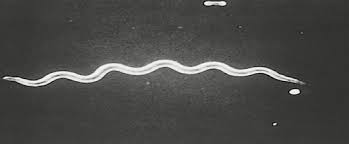
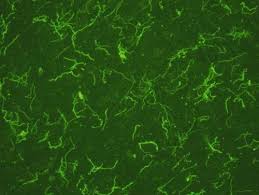
When you start researching Borrellia you will hear about the 3 forms that Borrellia will change into. I’m going to call them forms 1, 2, and 3.
I propose a proposal.

I am proposing that there is also a 4th form of this bacteria. I believe that research shows it. I believe the 4th form of Borrellia is completely distinct form the other 3 forms. It has a distinctly different purpose than the other forms. I believe that the 4th form of Borrellia represents a completely different way of reproducing. I also predict that this mode of reproduction will be found in other organisms which cause chronic disease. I will call it Form 4 for now. We know about it but I don’t think we realize its significance.
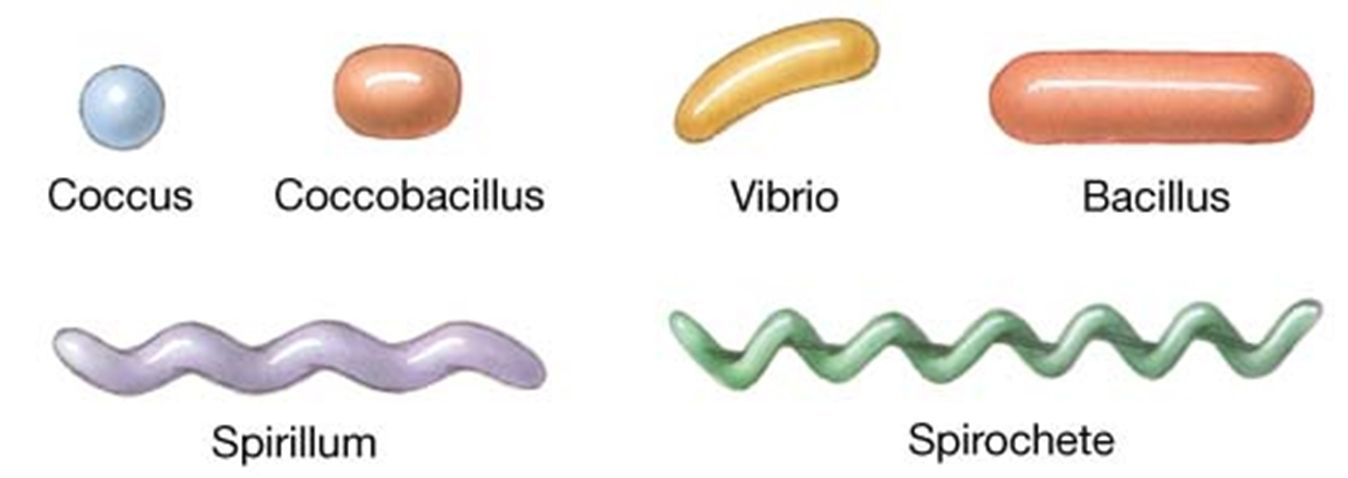
These are the different shapes that Borrellia can change into. The smaller shapes generally cause less damage. The corkscrew shapes are more aggressive. They use a form of internal propulsion and can move around anywhere. They move very, very quickly. I will show it to you later.
Form # 1 is the most primitive of the Borrellia shapes. This is the cyst form. This is when the bacteria/spirochete “packs” itself into a small round cyst and hides. It cannot move around at this stage and it almost goes dormant. It hibernates. It can survive antibiotic treatment, starvation, boiling, freezing, and even radiation. In this cystic shape it can still aggravate us but mainly leaves us alone. This stage is the best for us because it’s not very active.
Form # 1 – The cysts
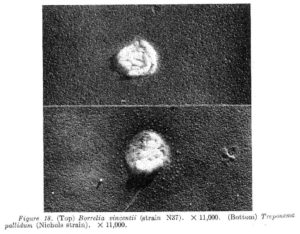
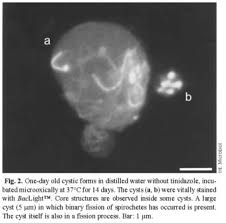
Note the round shapes. This is the cystic shape that the bacteria change into when going into hiding.
This is Borrellia beaten down into the cystic form.In this battle all we are doing it calling it a truce. It goes into hiding and we leave it alone. We are both calling it a stalemate (even though it’s living in us). However, when the bacteria is in the cyst form it is just waiting on more favorable conditions for it to live in. That’s all it is doing. It’s waiting. When conditions improve for the bacteria it will emerge out of that cyst and become active again. While in the cystic form it’s just waiting.
Modern medicine doesn’t recognize or acknowledge that this form exists or is relevant. This is how it is relevant for Lyme Disease. However when the bacteria changes into the cyst form it can stop producing symptoms. The infection can go hide and go dormant. The cycle of Lyme Disease can also go dormant. The symptoms have gone. The relapsing and remitting cycles of Lyme Disease are frustrating for everyone. .
Form #2 – The Rods
Form # 2 happens when the bacteria starts getting a little stronger. This happens when the immune system is weaker. The bacteria changes shape- the cyst gets elongated and becomes a longer rod. Can you see how it’s getting longer?
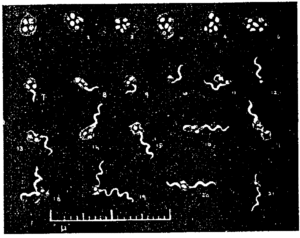
Notice the many shapes of the bacteria.
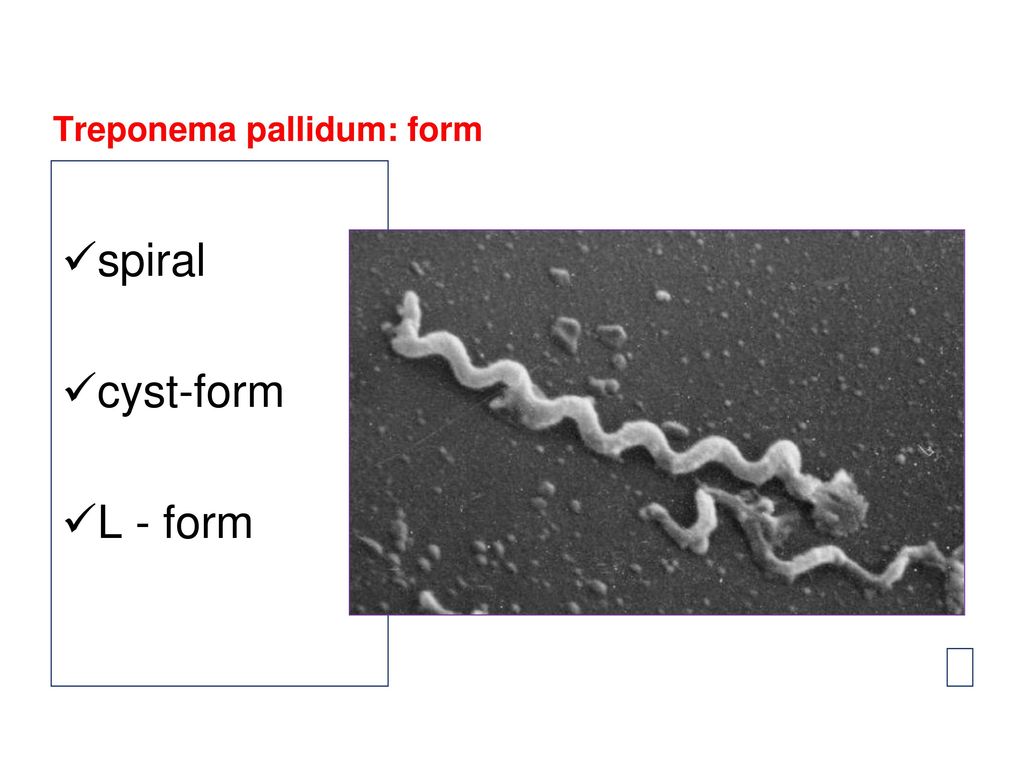
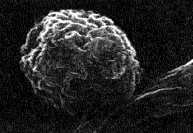 Bacteria in the spirochete form, the cyst and the L-body form
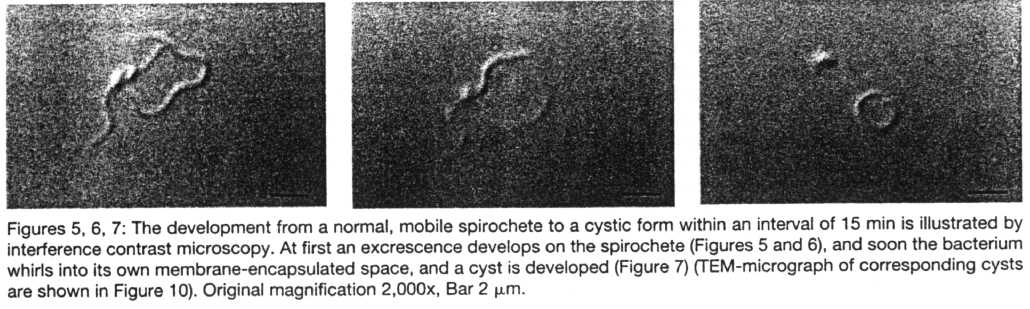
As is grows in size it also grows in strength This form 2 is also called the Cell Wall Deficient form or L- Form and it is very bad. When the bacteria is in this shape the disease is very active. It can now move around. It can hide inside the cells from the immune system. It can also literally hijack immune system cells and cause the body to attack itself. This process can cause autoimmune diseases. When the bacteria hijack and infects our cells antibiotics won’t work to kill it either. The Borrellia in Form #2 (cell wall deficient) will try to clump together with other bacteria like a herd. There is protection in a herd.
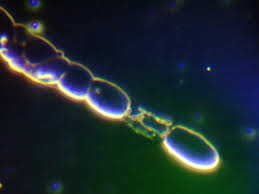
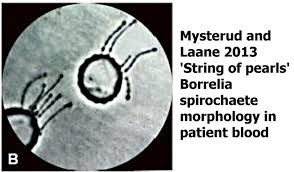
These L-form bacteria are starting to clump together. They are starting to form a community of bacteria. They are forming what appears to be a “string of pearls”. They are forming colonies and will begin producing a protective layer called biofilm to sustain itself. This biofilm is hard to penetrate by antibiotics. The most inner colonies under the biofilm are unreachable by antibiotics and the immune system. Biofilm production is a defense maneuver by the bacteria to evade the immune system.
The bacteria switches to L-form as soon as it senses antibiotics. Antibiotics don’t work against the L-form. Other bacteria, such as E-Coli, have the ability to do this. It is not unique to Borrellia.
Form # 2 (Cell Wall Deficient) has been attributed to how Lyme Disease becomes chronic. This allows the bacteria to be present in the body and doing doing damage yet evading the immune system. Borrellia will be constantly releasing toxins yet out immune system can’t find it. It really is right there in plain sight yet hiding at the same time. It’s releasing toxins from under the biofilms and it’s causing the body to attack itself.
 The L-form of the bacteria can hide in plain sight.
When the body attacks itself it is called Autoimmune Disease. This longer rod-shaped form, form 2, cell wall deficient, L-form of the Borrellia bacteria is attributed to things like paralysis, multiple sclerosis, mental disorders, chronic fatigue, “Post Lyme syndrome”, and many more. I believe that this form is more dangerous than the spirochete form. The ability of this bacteria to easily change to the L-form to evade antibiotics is why Lyme is notoriously hard to treat.
Form #3 – The Spirochete
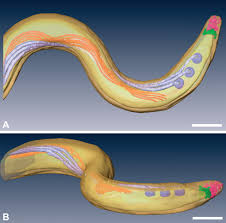
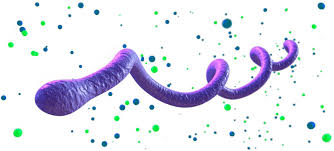
Form # 3: The third form of Borrellia is the Spirochete form. This is the largest of all 3 forms. This is the classical shape that people associate with Lyme. What happens is the cell wall deficiant form of borrellia actually acquires a cell wall. The outside hardens and becomes rigid. It is now capable of holding a shape. The shape it becomes is a helical spiral and it is about as long as a hair is wide. For a bacteria this is actually quite large. It’s at this stage that the bacteria acquires a lot of structures that ensures it’s survival. When the bacteria has this shape it’s purpose is get around and do damage. This is the active form of the Lyme disease. It will cause damage to some part of the body and a flare up will happen. The bacteria damages the body because it needs the nutrients in those tissues.
It’s not personal – the bacteria just need our nutrients to survive.
What the bacteria really wants are the fresh new nutrients that the immune system brings with it. It has learned that if it damages tissue then the body will bring fresh new nutrients to repair the damage. It will even deliver it right to the bacteria. The Borrellia bacteria does cellular damage and the immune system comes to inspect the damage and repair it. The bacteria need these nutrients and this is how it has evolved. This is the cycle. It’s brilliant. It uses our own immune system to bring it exactly what it needs. What we get is joint destruction and all the other symptoms of Lyme.
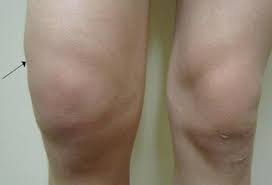
The Borrellia bacteria thrive on certain specific nutrients. It has figured out that if it infects us and damages out bodies then our immune system will bring these exact nutrients right to it. Here is an example – Borrellia like the synovial tissue that the knee joint is made of. If they just damage the knee a little bit the immune system will bring a whole lot of the fresh nutrients right to it to repair itself. That’s the easier way to acquire the nutrients. Do a little damage and the body brings a whole buffet of it right to you. That cycle is a basis of this whole disease. The bacteria infect us because they have figured out how to parasitically survive within us. Those nasty little things! They thrive when our immune system is weak. Strengthening the immune system is the only way to keep them from scavenging from us.
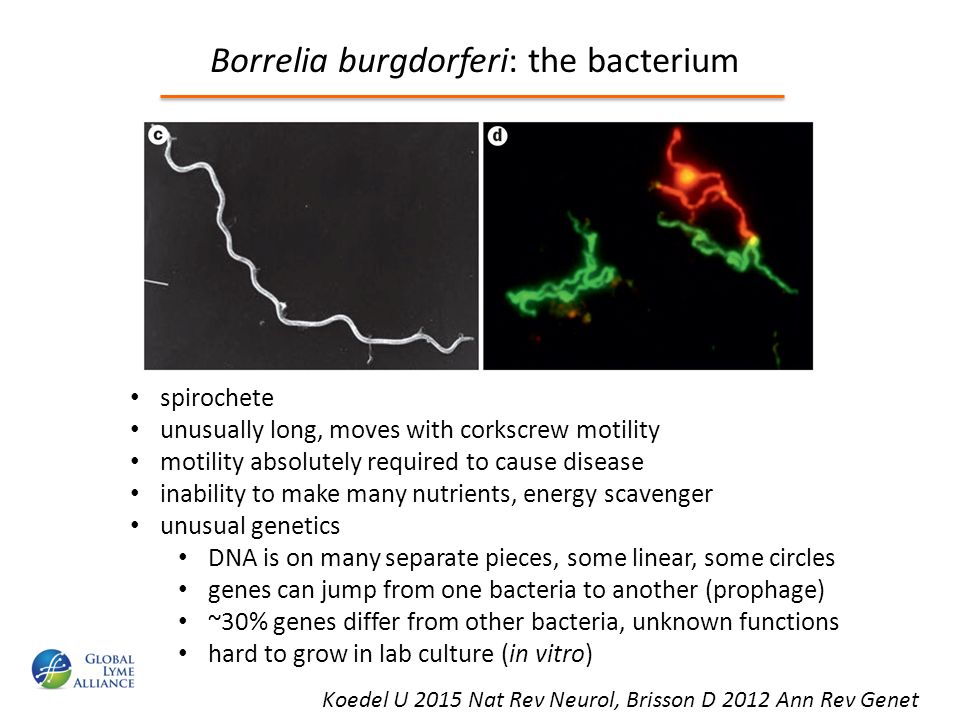
Genes can jump from one bacteria to another. Think about that. These bacteria can trade their DNA. This makes it hard to kill.
Borrellia spirochetes can move just about any direction they want and they are very, very, very fast. Our white blood cells are the fastest cells we have and Borrellia spirochetes are 3x faster than them. Imagine if the robbers were 3x as fast as the cops and you see how truly unfair it is. These bacteria have evolved so much more than us and they totally thrive by using us against ourselves.
The Borrellial spirochete’s helical coil structure has a bunch of different smaller structures associated with it. It has these things called flagella which allow for internal propulsion. This means it can take off like a jet boat. These flagella can also spin the spirochete and it becomes a drill. This bacteria can drill into anything, including bone. The bacteria can easily drill through a cell wall and infect cells, especially red blood cells.
Watch the Bacteria move around the cell! Lyme bacteria move the same way!
These are actual Lyme Borrellia Spirochetes in Motion. This is the culprit Exposed!
This clip even has audio.
Form #4: There are other structures spaced regularly along the spirochete. These are proteins on the outer surface of the cell. These are tiny little structures on the outside of the cell, and they line the outer edge of the spirochete like glitter. I believe that these proteins somehow have a purpose in the longevity and perpetuation Borrellia infection as a whole. I think that these proteins somehow keep the overall infection going. I wonder if they could be considered a distinctly separate form of the bacteria. I am proposing that these outer surface proteins could be a 4th form of the bacteria, and they represent an evolutionary process for the bacteria that we just haven’t figured out yet. Sometimes these outer surface proteins are called granules or blebs. These things are tiny. Could you culture the blebs, inject them into another tissue, and then find evidence of the infection in that tissue? This the basis of Koch’s Postulates of transferring an infection to prove that it was infectious. Can these blebs reactivate into Lyme Disease?
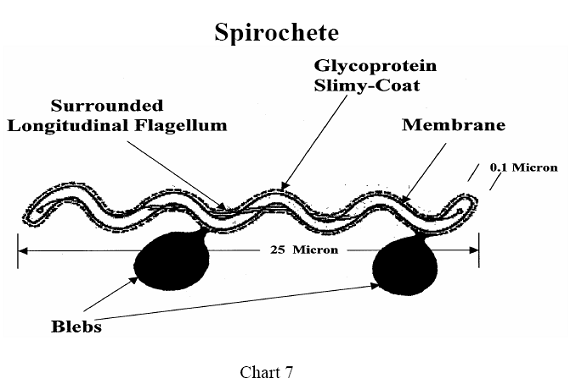
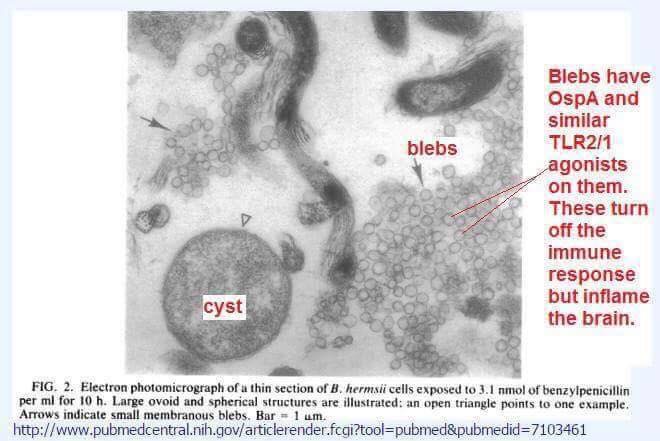
Here is how I believe the Borrellia spirochete uses these 4th form as a survival skill. The spirochete has microscopic proteins AKA blebs all over the outside of it. The Borrellia spirochete senses danger is close by and it knows it has been found. The bacteria knows it is in trouble. See the video below.
When the spirochete senses it has been caught it immediately starts a defense maneuver. It starts shaking itself like a wet dog attempting to dry itself. The bacteria is about to change from one shape to another. It is about to switch itself into the L-form. It is shaking to spread pieces of itself everywhere. The bacteria is about to disappear. It is very important to understand this concept because this is why Lyme is so hard to beat. It is conceivable that these pieces of outer surface proteins can reactivate themselves? I challenge science to explore this hypothesis. Can blebs reactivate themselves into active Lyme disease?

Example of how a spirochete slings it’s DNA (called “blebs” of DNA) everywhere to reproduce. This process is called Granular Shedding.
For one minute the spirochete flings these DNA pieces everywhere. It is literally losing DNA and the information that it carries. Some of this DNA tells the bacteria how to hold itself into the spiral shape. When the DNA is gone the spirochete shape no longer can hold the spiral shape, it loses its cell wall (it doesn’t have the DNA programming required to hold it together anymore), and it reverts from from Form #3(spirochete) back to form #2 (Cell Wall Deficient or L-Form). When the bacteria flings its DNA everywhere it covers the area like a fog machine. Those “blebs” of DNA are about impossible to see but we know that they are there. That’s the 4th version of the Borrellia organism. The beauty of this is that those DNA pieces can mature right back into spirochetes when the coast is clear.
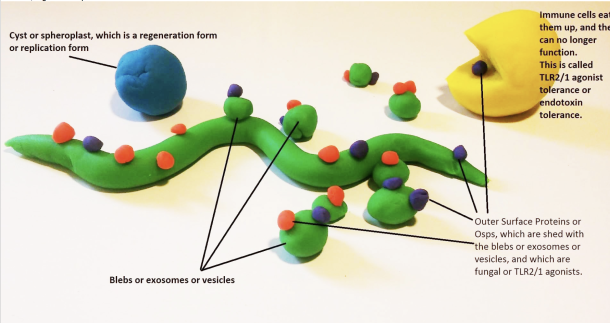
OSPs- specifically Outer Surface Protein A, that’s a topic for another time.
The process of violently shaking like a wet dog is called “granular shedding”. It is getting rid of the excess baggage in order to get smaller.
This is a picture of Borrellia shedding pieces of itself everywhere!
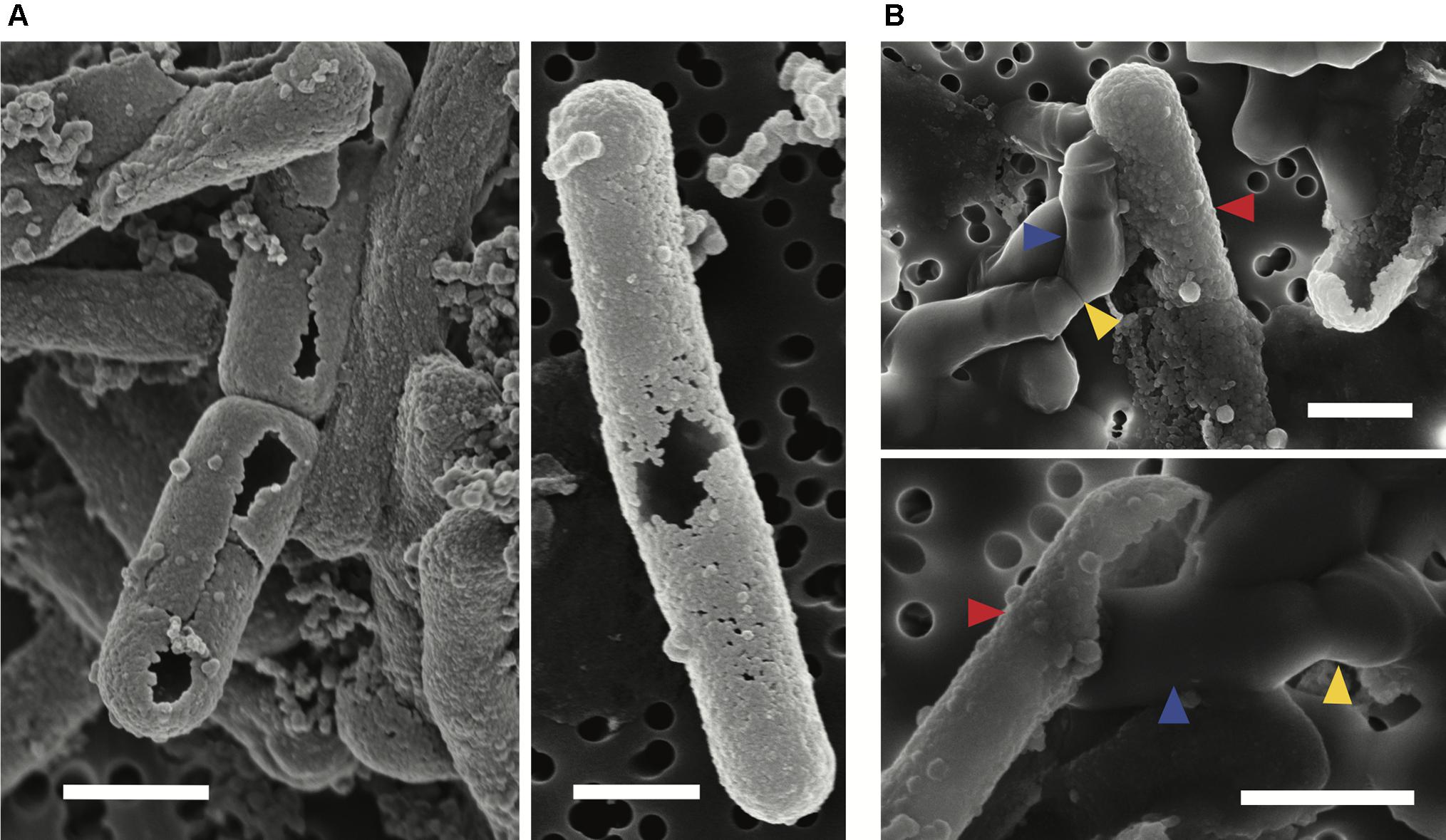
These pictures are amazing. This is the moment the bacteria shed their outer layer. This is the moment they switch to L-form. This show the Outer Surface Shedding in action. The layers breaking up can be a thick chuck, like on the left image, or thinner and lacy (Rt side).
You can see literal cracks forming in the cell wall.
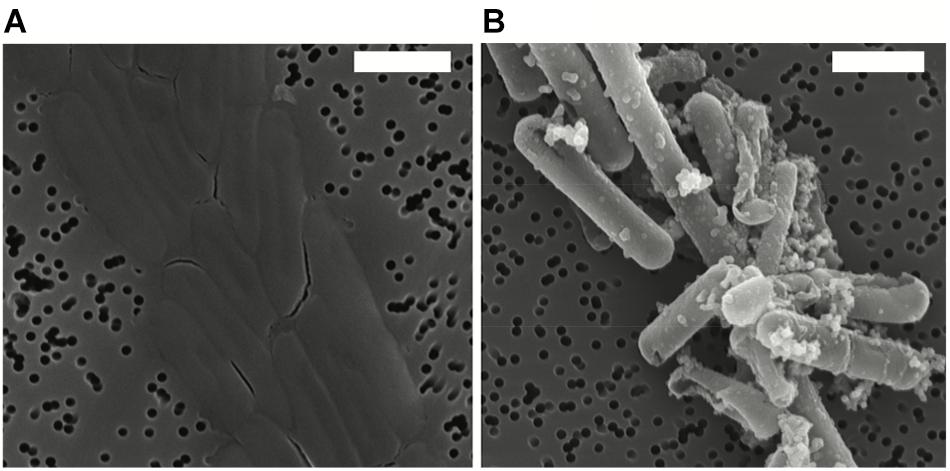
https://www.frontiersin.org/articles/10.3389/fmicb.2018.03210/full
This moment right here is when the bacteria go invisible to the immune system. They just disappear…
Researchers have shown that Borrellia will produce these granules or “blebs” to either a strong immune system response or powerful antibiotics. This is a defense maneuver that it seems to reserve for when it’s in really bad trouble.

And POOF! It’s outer shell disappears and it’s gone.
Imagine this process from the point of view of the immune system. The person has a knee pain that keeps flaring up.
The immune system has the spirochete in its sight and it sneaking up on it. The spirochete senses that it is caught. All of a sudden it starts shaking real fast. The immune system doesn’t know why the bacteria is shaking so violently. The bacteria knows that’s it’s getting rid of some baggage.
The immune system can’t see the microscopic blebs flying everywhere while the bacteria is shaking. Blebs are tightly wrapped up pieces of DNA code. It can’t see that the bacteria is spreading copies of itself everywhere. Then “poof” the spirochete disappears into an L-form or a cyst. The immune system sees that it has some damage to clean up. It promotes inflammation and starts the immune system healing response.
 This is the moment that Borrellia undergoes Granular Sheand disappears.
It turns into cyst form.
Here it is again. In slow motion and more detail. See it turn into a cyst and hide!
This leaves the immune system a little confused. . It is not quite sure what just happened. Where did the spirochete go? or where the nasty spirochete went but it’s now distracted by having to clean up the damage caused to the knee joint. This cycle happens in all kinds of tissue throughout the body.
In addition to the “blebs” (pieces of DNA) the spirochetes also has about 4-6 larger round shapes hanging off of it that are located towards the ends of it. There isn’t a good term for these structures so I will call them Buds. Some call them gemmae (which accurately means buds). I believe that these structures are another way for the spirochete to reproduce.
Gemma – possibly another mode of reproduction and spread.
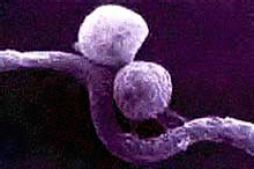
Coiled up bits of DNA that I believe can be dropped in order to reproduce!
The spirochetes have about 4-6 buds located near the end of it. These large round structures are either attached directly to the spirochete held onto it by a short stalk.
We’re not really sure what these are for.
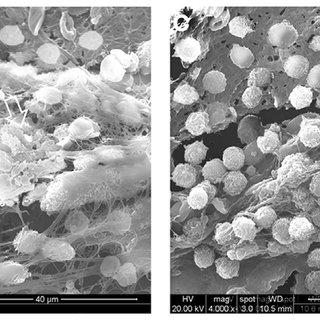 We know that biofilm will attach itself to the Gemma. How convenient!
Here is what i think. It makes sense.
What the Gemma really represent for the spirochete is similar to what a flower or seed represents for a plant. When the Borrellia spirochete senses danger, in addition to spreading its DNA by shaking violently like a wet dog, it drops these 4-6 round buds from the end of it.
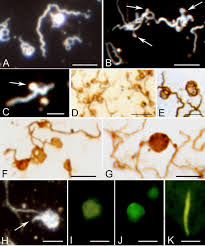 Close up images of spirochetes. You can clearly see the Gemma.
When in danger the spirochete drops these buds (Gemma) right away. The buds/gemma act as protection for genes necessary to reproduce. This is similar to what a seed does for a plant. The gemma stay silent until the inflammation goes away and the environment improves. These spherical Bud structures act as a resting stage for the basic DNA needed to grow more bacteria
Through genetic transfer with other Borrellia and Co-Infections it can actually get any remaining DNA code it needs. The Borrellia community can “fill in the blanks” so to say.
These bacteria can trade their genes back and forth in order to get stronger. They can shuffle them back and forth like a deck of cards. They take what they need and give the rest back.
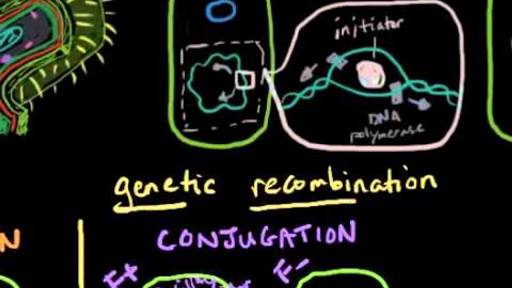
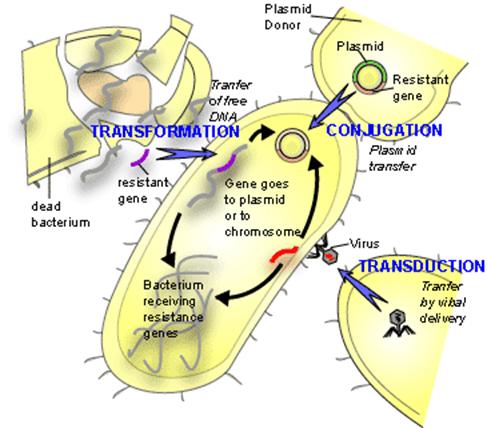 Look closely at what’s happening here.
That picture shows bacteria trading genes.
This whole idea, if true, represents a phenomenal survival strategy for this bacterial parasite. These pod like forms may represent the starting point of a new inflammatory cycle. The flare up and remission cycle life cycle is typical of many diseases of spirochetes. This explains how the Lyme Disease complex comes and goes. It shows why you’ll never truly get rid of it. It must be continually treated through controlling diet and the inner environment.
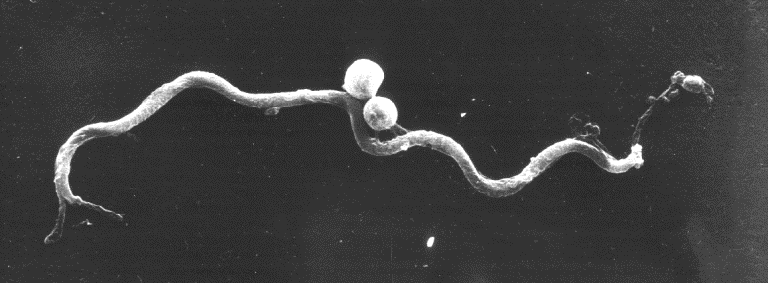
Here you can see the Buds / Gemma attached to the spirochete
Borrellia has evolved a set of defenses that would make our great military envious. Borrellia is so smart that it can lay hidden in plain sight and dormant. We can know exactly where the infection is and yet at the same time we cannot see it or detect it. Our immune system won’t see it and forgets about it.
 It’s Lyme…… I’m back
Borrellia will always emerge from under it’s cloak of invisibility when our immune system is down. This is the worst possible moment for us.
Borrellia will change forms, it will grow bigger and stronger into a spiral structure that can swim in different directions. The bacteria will cause damage to our body (we will start hurting for no reason) and our immune system will flare up as we try to heal the damage.
Then when the immune system comes around to repair the damage the bacteria will shrink back down into a little ball and hide again for awhile. The pain will subside and the flare up will pass. This bacteria causes things to come and go in cycles like these.
Symptoms will come and go. They can get bad for no apparent reason. Then, after all kinds of treatment, the cycle subsides and the moment has passed. This flare up is also called a relapse. It is a deterioration of the disease after a period of improvement.
 Stop the flare ups!
We’re either working on recovering from this disease or we’re working on a relapse of it.
Over time this cycle repeats. These relapsing cycles of flare up and remission cause degeneration. Joints can get damaged. Sometimes multiple joints may even get destroyed.
It is not normal for multiple joints to need replacing in a human being.
These conditions worsen over time. This is Lyme disease. The infected person knows deep down that “their body is not right from the inside”. Some may say that “it feels like their body has been taken over” or “it feels like my joints are being eaten from the inside”
In fact that is exactly what is happening. The one thing that keeps these parasitic infections under control is the strength of our immune system. These bacterial infections will have a constant cycle of flare-ups and remission of symptoms. There will often times be a fever that comes and goes. There are good moments and bad moments and the good moments keep getting farther and farther apart. This is the way this disease presents itself.

The whole body must be addressed. It’s not just about “killing the bugs”.
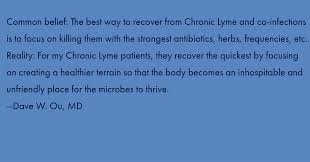
In order to get this infection and it’s co-infections under control we need to fully understand what we are up against. Once we fully understand how these infections all work together we will be able to come up with a logical treatment plan to combat them.
Borrellia is the ringleader to this group of infections, so to say. It is the master shape shifter. Some say it can change into 3 different shapes to evade the immune system. Like I postulated before- I’m going to go out on a limb and say I think it has 4 different manifestations (shapes) of itself that it uses when necessary in order to guarantee it’s chance of survival. We just tend to focus on the ones that move around, I think we’re missing the importance of the other.
In other words, Borrellia has a plan, a backup plan, and a backup plan to it’s backup plan. And it’s even got another backup plan in case the first three go wrong. If the first three forms don’t evade the immune system then the 4th one surely will.
Borrellia has been around since the beginning of the Earth. It was here before we had water, the atmosphere, the moon, and the dinosaurs. It’s survival skills have evolved so well that we really don’t stand a chance at conquering it. We literally live in it’s world.
 Remember Otzi the Iceman?
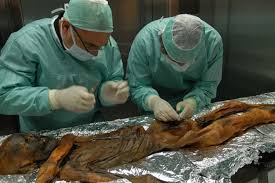 He is Europe’s oldest natural mummy.
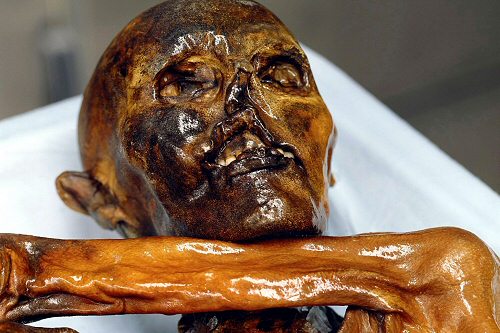 Otzi – The Iceman mummy had Lyme Disease
The Borrellia bacteria infects us and finds ways to scavenge nutrients from us. It does not want to kill us it only needs to eat us from the inside to survive. That is the parasitic nature of this organism. If a host like us isn’t around to infect it will just hang out and infect other animals.
It gets transmitted from one animal to the next and sometimes we humans get infected. Mothers can even infect their babies when they give birth. Can you see that eradicating the disease completely is impossible. If we get infected we need to devote our efforts to strengthening our immune system. Success depends on getting our body so clean on the inside that the disease goes into hiding.


We can “clean up the swamp” so to say and make the body healthy place. The organisms like unhealthy places.
“Conquering this disease is an inside job.”